Portugal is historically a large producer of chicken and therefore of eggs. Egg whites have been used for centuries for such things as starching clothes (and the habits of nuns), making communion hosts, and clarifying wine, thankfully leaving the yolks for baking and pastries. These circumstances mean that there are many different delicious pastries to sample in Portugal.
Conventual sweets are an important part of the culinary tradition of Portugal dating back to the 15th century. Nuns and monks who lived in Portuguese convents and monasteries used the surplus egg yolks with other inexpensive ingredients (at the time) such as sugar and almonds to create many different sweets for religious festivals and for private sale. Sugar was imported from many of the Portuguese colonies making sweets more widespread. Starting in the 19th century, nuns and monks needed to financially support themselves and conventual sweets started sold throughout Portugal.
My first trip to Portugal was to Lisbon in 2022 and the only Portuguese pastry I tried on that trip was Pastel de Nata. It’s so delicious and it’s the only pastry that has entire bakeries devoted to it, so it makes sense it’s the one everyone talks about. On a more recent trip, I spent nearly a month in Portugal, including Porto, Esmoriz, Cascais, Lisbon, and walking the Camino Portuguese Coastal Route along the stunning Portuguese coastline.
I did a deep dive at the Pastelarias when I was in Portugal and there are so many delicious pastries to try other than the most famous, Pastel de Nata.

Pastel de Nata:
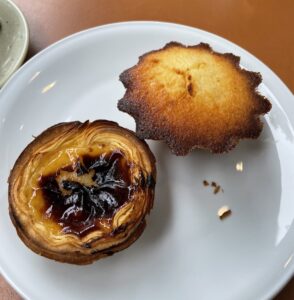
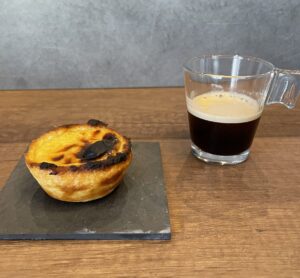
First things, first. No trip to Portugal is complete without trying a Pastel de Nata. This sweet treat has the best of both worlds, smooth and creamy on the inside, flaky and crisp on the outside. First baked in the Jeronimos Monastery in Belem, Lisbon. The line in Belem is long to sample this delicacy in it’s home bakery, but worth it for the experience. My other favorite places to eat a Nata are Manteigaria (in Porto and Lisbon) and Santo Andre (in Lisbon). While in Lisbon, be sure to stop by the Manteigaria shop at the Time Out Market to see them being made, I promise it is absolutely mesmerizing! The best ones are right out of the oven, sprinkled with a bit of cinnamon. But, even if they’re not baked on site, they are still amazing. And they’re small enough, that you’ll never regret indulging in them.


And if you’re feeling adventurous, or love baking, take a Pastel de Nata Baking Class! I did this in Porto and it was the best Nata I have ever eaten! There’s just something about putting in the extra effort yourself that really makes for an amazing experience and elevates the taste!
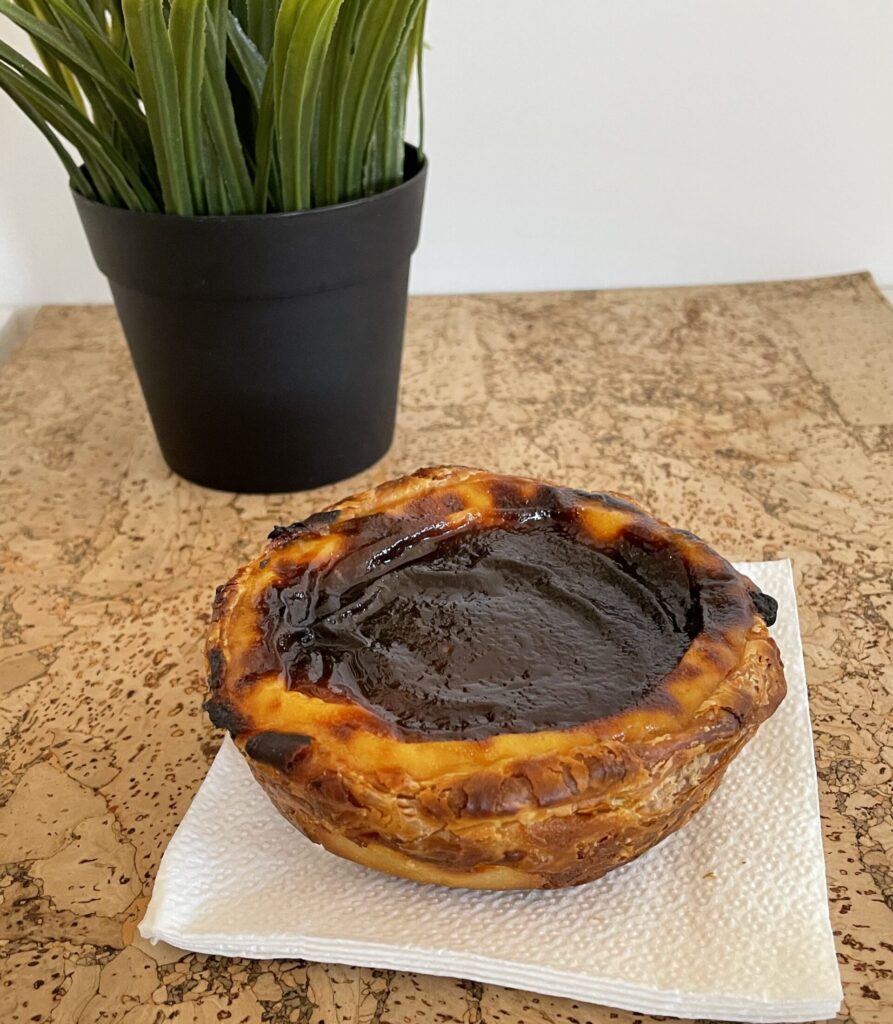
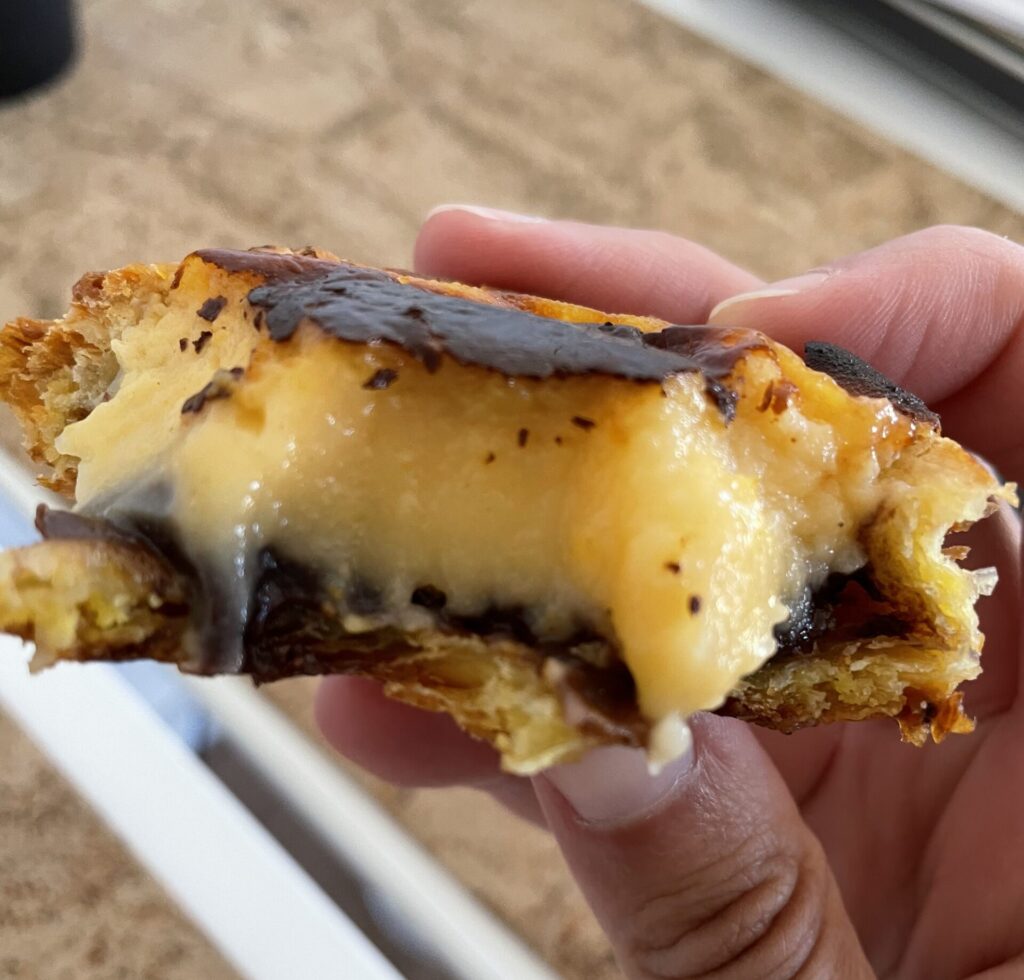
Chocolate Pastel de Nata:
This chocolate version of a pastel de nata was recommended by a local. Something I wouldn’t have picked out myself, but I just love a personal recommendation! This may have been my favorite pastry I ate the whole month I was in Portugal. You’ve gotta try it if you see this at the Pastelaria!
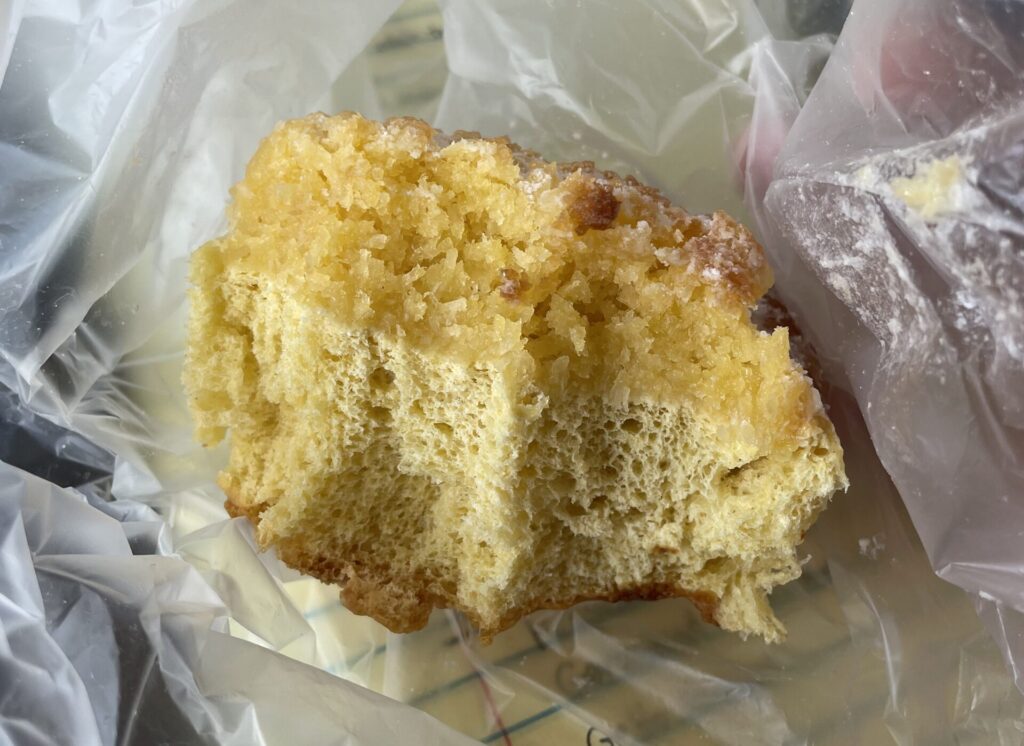
Pão de Deus:
Pão de Deus translates to ‘bread of god’ and oh my gosh, is this pastry heavenly! This is a fluffy sweet brioche bun topped with coconut. It was first made in a convent in the 15th century. Iloved this the first time I tried it. I returned the next day and they said it was only available on the weekends. Later I found it at a mini grocery store in Porto, baked tightly in a tray like American Cinnamon buns so the sides touch and get all squiggy, and it was also incredibly good. I recommend this in all it’s sizes and forms.


Merlitones:
Merlitones is a puff pastry shell wrapped around frangipane, a sweet almond paste. It can be difficult to know what you’re getting when pointing to the pastry case, and sometimes you are greatly rewarded. I had first tried a mini version of this (which I loved), so next time I ordered the full size pastry. I love frangipane in baked goods, so I loved this. I mean just look at the inside!!
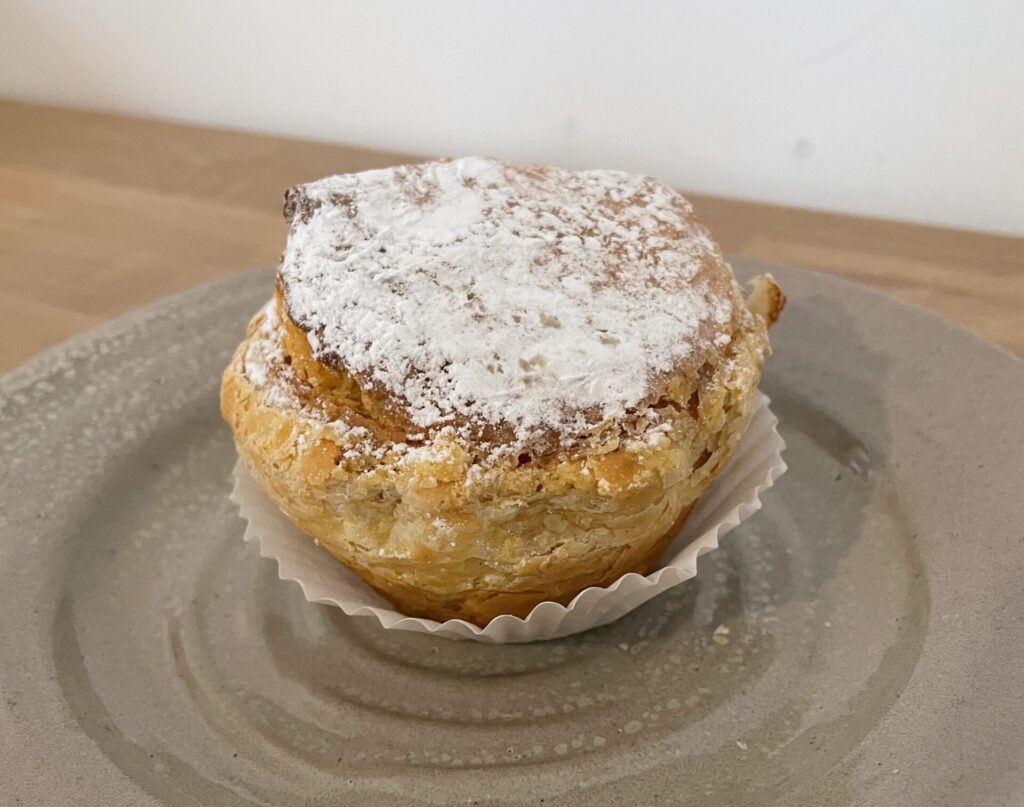

Pastel de Tentúgal:
Tentúgal is another conventual sweet. It was first created in the 16th century by Carmelite nuns in Tentúgal. It is made with a sweet ovos moles filling (egg yolks + sugar), and is wrapped in a paper thin dough, similar to phyllo dough. It’s not as filling as the others, but delicious and perfect for a quick snack.


Bolo de Arroz:
These rice muffins are easy to identify as they are wrapped in paper that has the words ‘Bolo de Arroz’ printed on it. This moist cake is delicious. I first encountered it when I went into a bakery to get two sweets. The employee told me they were having a promotion where I could get 3 pastries for the price of two. I asked her which was her favorite pastry and pointed to the Bolo de Arroz. I would not have ordered it otherwise, so I’m very glad she told me of the promotion and recommended her favorite one!

Brioche Croissant:
Brioche is a really big deal in Portugal again, because of all the egg yolks. Dense, doughy, and fluffy, this is the absolute opposite of a flaky French croissant.
Brioche Pizza Pocket:
Brioche bread plus pizza filling is a match made in heaven and is good anytime of day. I mostly had it for lunch, and I had it quite a few times. If anyone knows the Portuguese name for this please let me know!
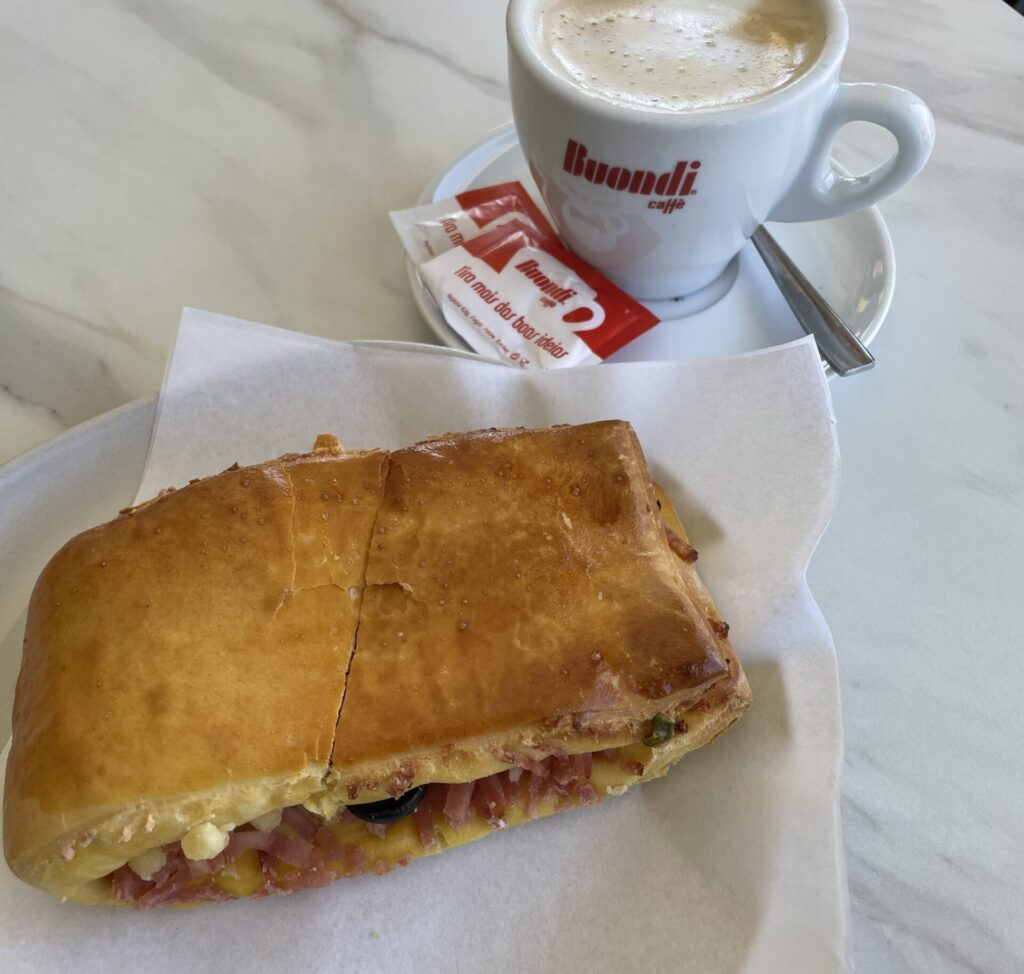
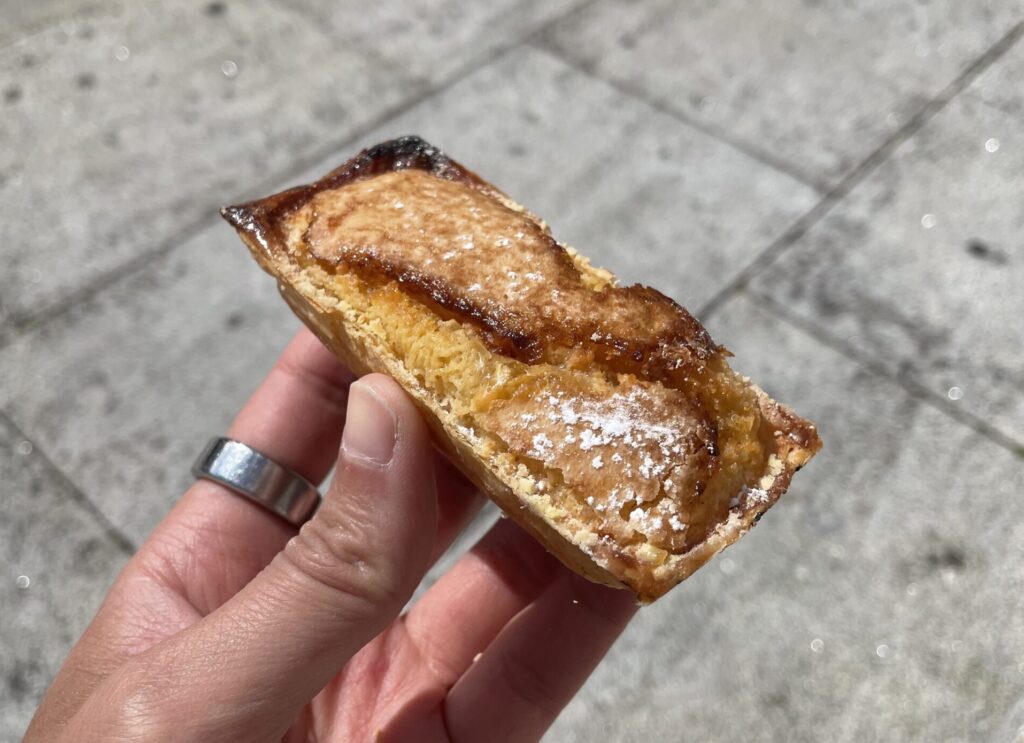
Sidonios:
Sidonios has a sweet dough crust with an egg yolk and almond flour filling. It’s delicious and I highly recommend trying it. I had it in Viana do Castelo after a Brioche Pizza Pocket, when I stopped for lunch after I finished walking on the Camino de Santiago for the day.


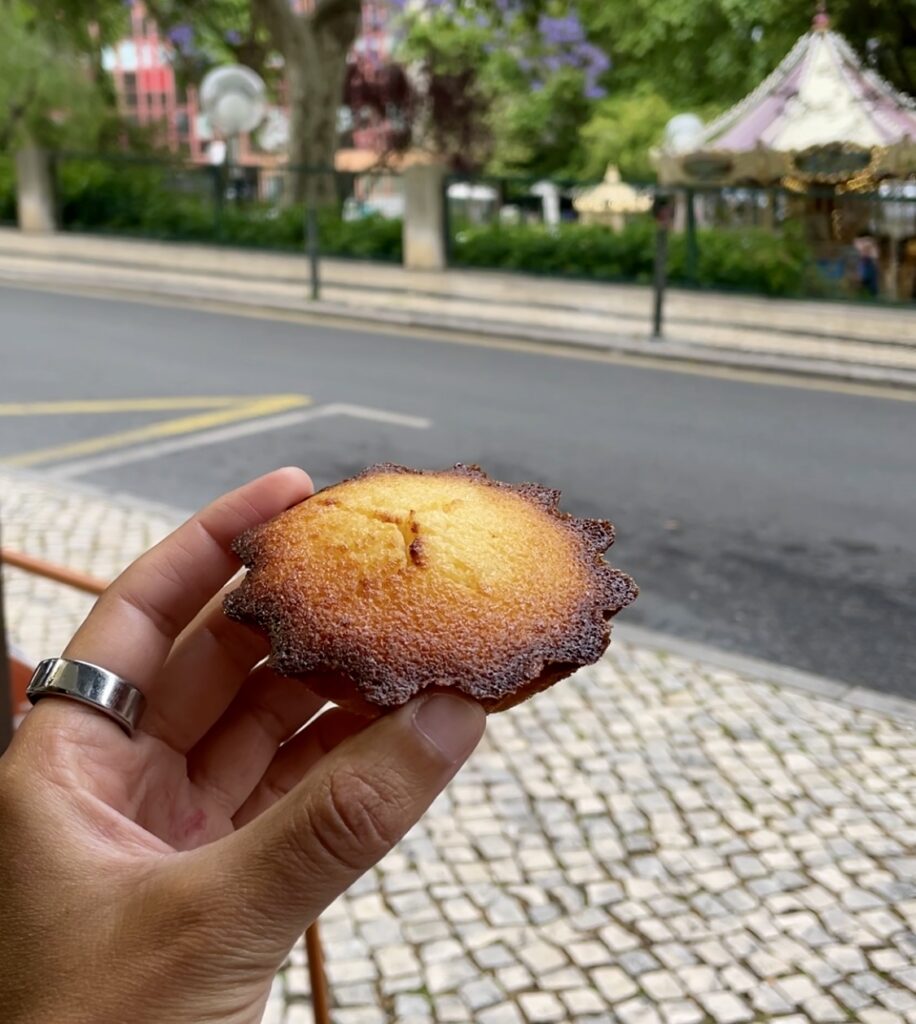
Queque:
Queque is pronounced like ‘cake’ and it is AMAZING! I had this one from the Bakery chain A Padaria Portuguesa while in Cascais. It’s a moist cake baked in a flower shaped wrapper and is perfect for an afternoon treat with coffee.
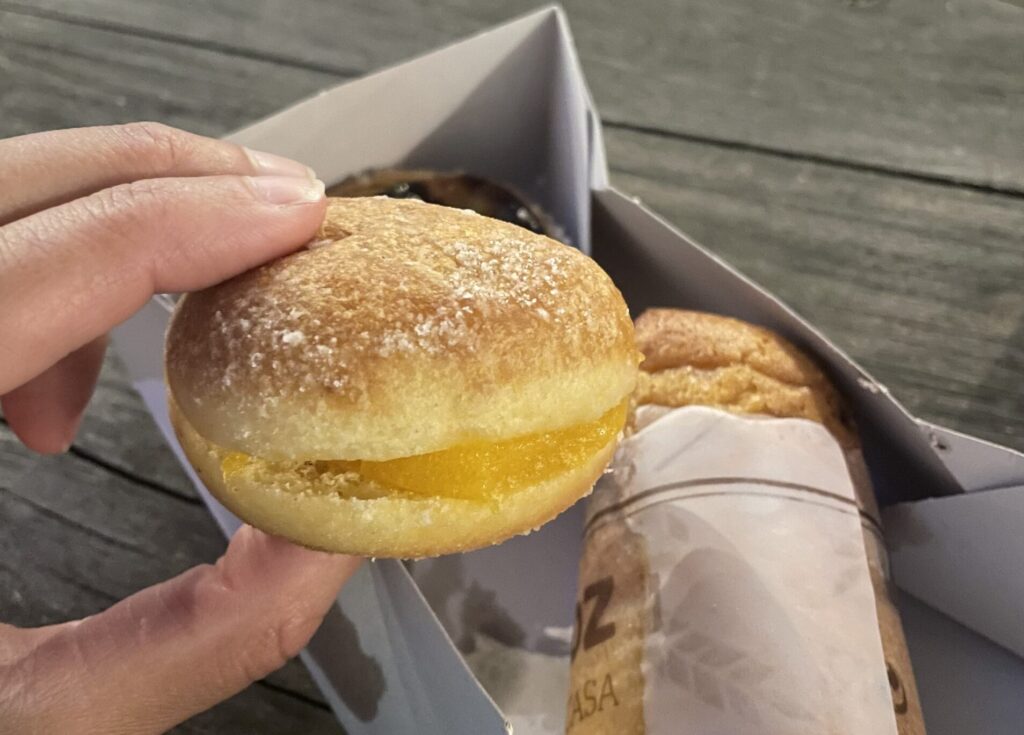
Berliner:
A Berliner is a yeasted donut cut in half and filled with a custardy pastry cream. It’s a popular treat to have at the beach in Portugal.
Jesuita:
These triangles of puff pastry were originally prepared in Portuguese convents. The name, Jesuita, is an homage to the cloak of the Jesuit order. It can be a bit messy to eat as it’s a flaky pastry and is usually coated with a thick frosting that cracks in shards.

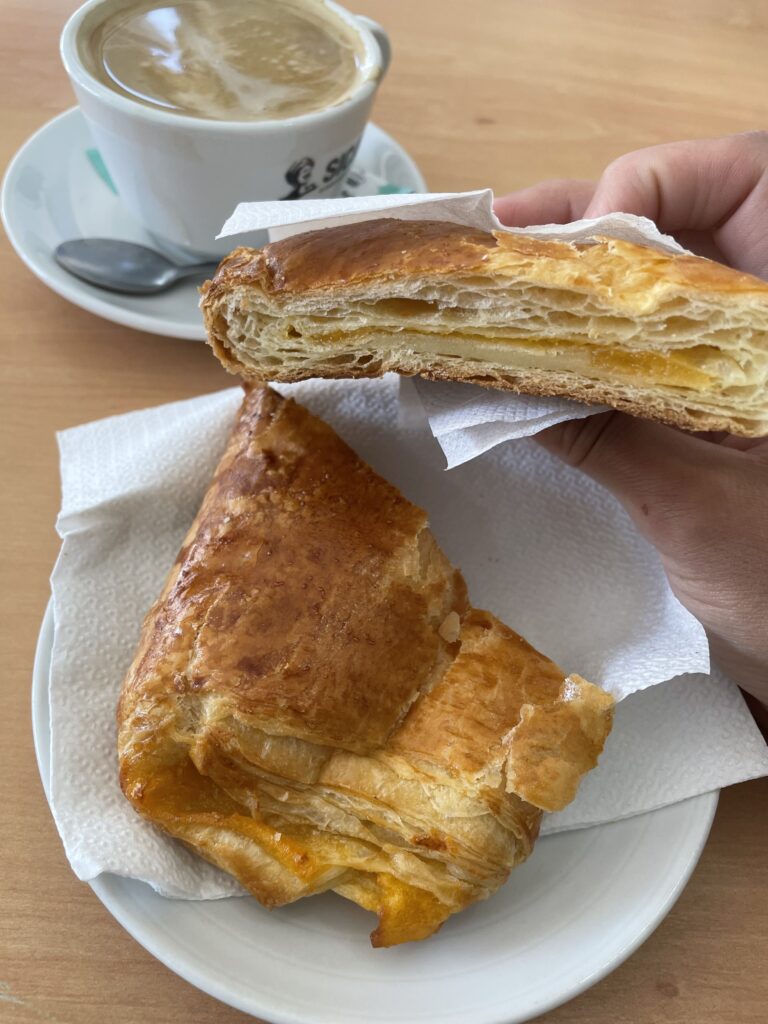
Cheese Danish:
While I don’t think this is specific to Portuguese culture, I had a cheese danish type pastry many many times, because it is just so good. I love the tangy cheese filling paired with a flaky pastry. Your pastry will often be served cut in half. I really appreciate the care shown with that gesture and it’s something unique to Portugal. If there is a Portuguese name for this pastry I’d love to know what it is! Please reach out (figtreetravels1 at gmail dot com) and tell me what it’s called.

Top Travel Tip:
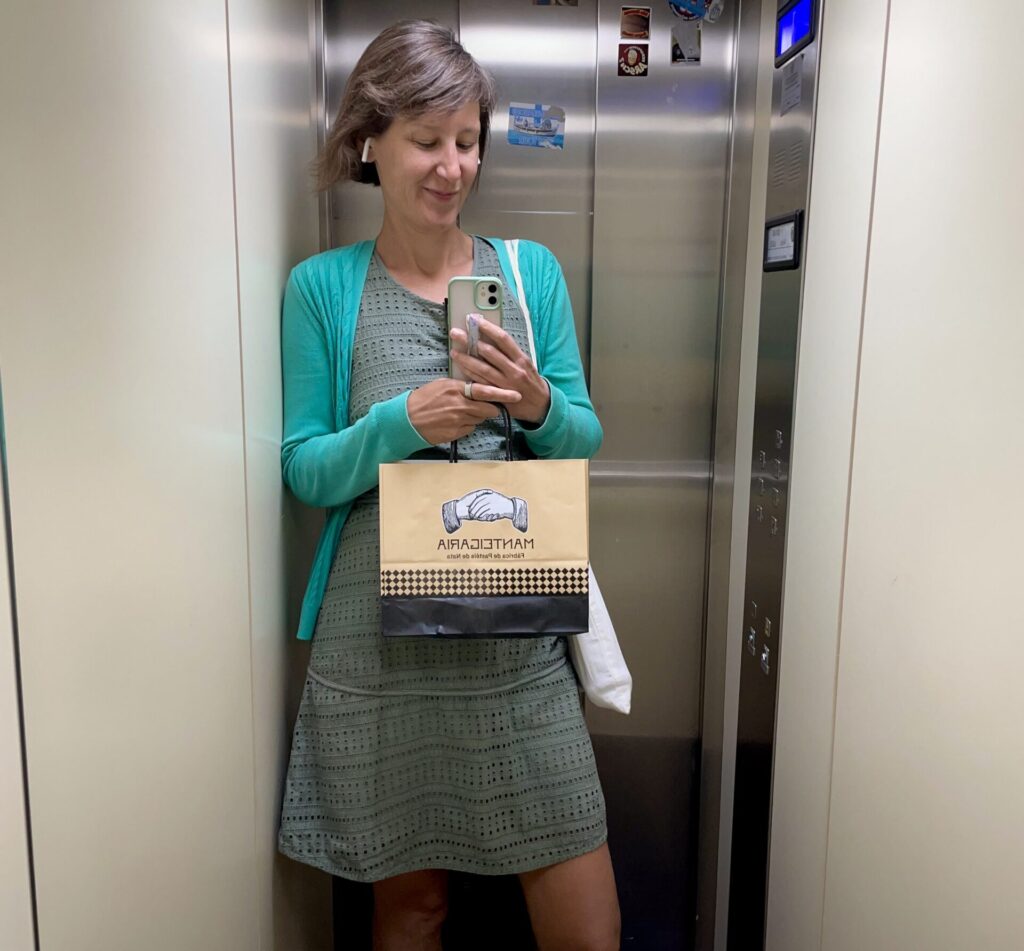
Wherever you travel to after Portugal, bring a Pastel de Nata snack with you! If you’re flying, get a bag like this one from Manteigaria when you buy your pastels. Fill the bag with snacks and bring it on the plane. It does NOT count toward your carry on/personal item allotment.